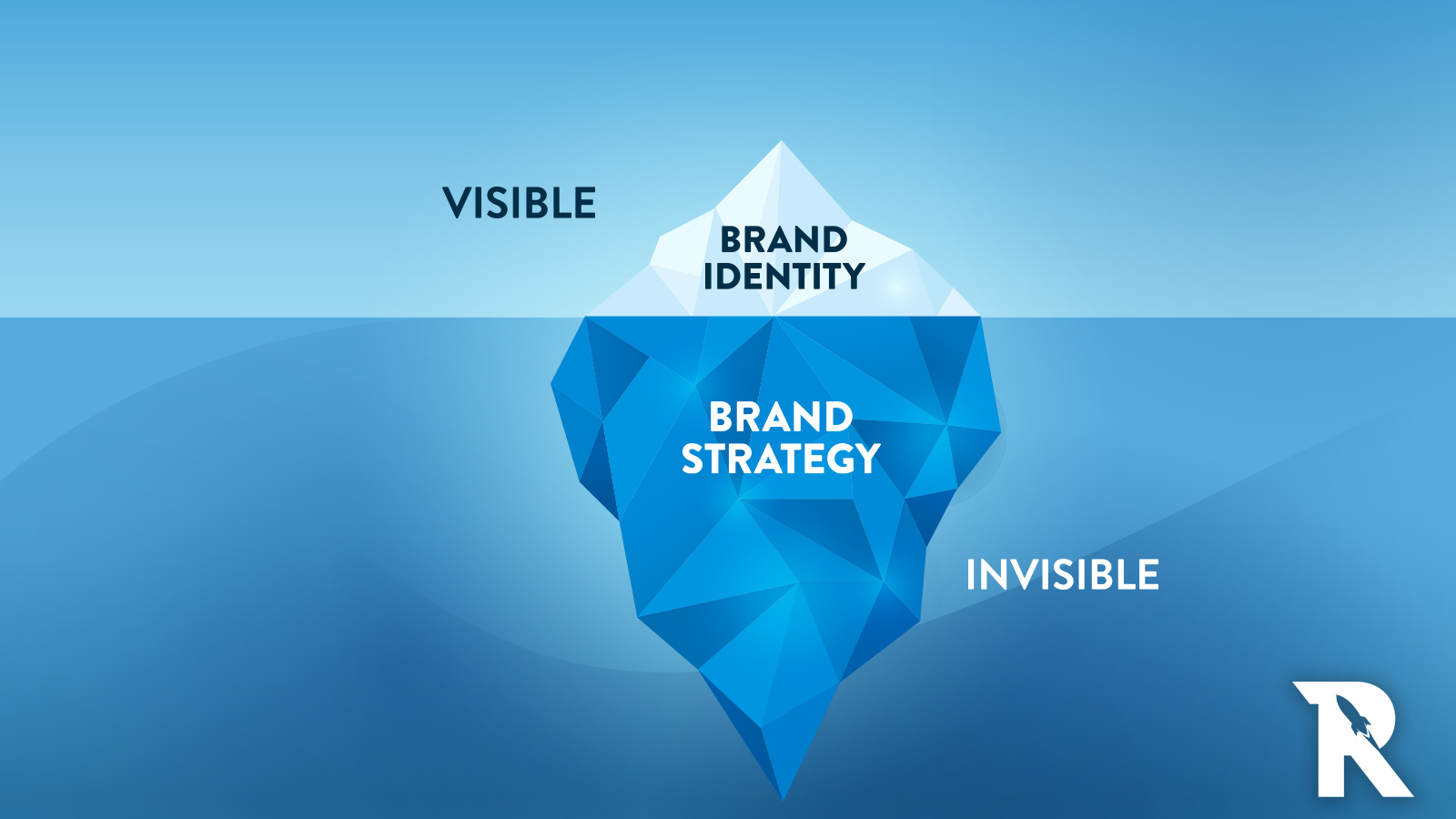
Title: Why Great Design Still Wins: Standing Out in the AI Era
In the race to scale content, many brands are losing something far more valuable: distinction.
AI has rapidly transformed how marketing teams operate. From lightning-fast content generation to dynamic asset testing, we’ve entered an era of unprecedented production speed. But with that speed has come a wave of homogenized experiences—campaigns that technically “perform,” but lack soul, cohesion, or memorability.
At RocketDog, we’re not anti-AI. We’re pro-strategy. We use AI as a tool—not a crutch—to support creative systems, accelerate workflows, and test ideas more efficiently. But in a world of lookalike content and templated branding, it’s great design—strategic, intentional, human-driven design—that still wins.
Content May Be King, But Design Is the Kingdom
AI has lowered the barrier to entry for content creation. That’s a win for efficiency, but it’s created a new problem: content saturation. According to a 2024 study by Adobe, more than 80% of marketers now use AI to assist in content production, yet 58% of consumers say brand content feels repetitive or generic (source).
Why? Because tools are now doing the heavy lifting without the context, creativity, or cohesion that branding demands.
When everyone is using the same AI engines, the risk of sameness becomes real. Design—the kind that’s rooted in strategy, customer empathy, and creative nuance—is what separates forgettable brands from unforgettable ones.
What Brands Get Wrong About Design in the AI Era
There’s a prevailing myth that AI can now “do design.” In reality, it can only remix what it’s already seen.
Most generative tools (like Midjourney, DALL·E, or Runway) are trained on existing data, meaning their output reflects the median of the design world—not the cutting edge. AI can generate something acceptable, but rarely something exceptional.
The brands that lean too heavily on AI-generated visuals, auto-formatted layouts, or copy-paste brand templates risk losing the essence of what makes them unique. They look polished—but indistinct.
And in a digital environment where consumers see up to 10,000 brand messages per day (source), distinction is everything.
Design That Performs Is Design That Connects
Great design is more than style—it’s a strategic function. It builds:
-
Recognition: A cohesive visual language that audiences instantly associate with your brand.
-
Trust: Consistency across touchpoints signals professionalism and reliability.
-
Emotion: Thoughtful design elicits response—delight, curiosity, even loyalty.
A 2023 report by McKinsey & Company found that companies with strong design capabilities outperformed industry benchmarks by 2X in revenue growth (source). Not because of prettier assets—but because design was embedded in their strategy.
Strategic Design at RocketDog: Real Results, Real Impact
At RocketDog, we’ve seen how the right design system can transform not just marketing outcomes—but how an organization shows up in the world.
Recently, we helped a regional B2B services firm struggling with fragmented messaging and inconsistent brand touchpoints. Instead of jumping into visual refreshes, we started by mapping their entire customer journey—from first digital impression to post-sale engagement. What we uncovered was brand noise: visuals didn’t match voice, voice didn’t match values.
We built a new design system that aligned visual identity, messaging, and UX across channels. Branded templates empowered internal teams. Microcopy reflected core brand beliefs. Design kits gave marketing the agility to execute without dilution.
The results? Website engagement up 72%, proposal close rate up 19%, and their first-ever inbound leads from enterprise prospects. That’s what design can do when it’s treated as a business advantage, not a decorative layer.
Where AI Fits Into the Creative Equation
We use AI tools every day. But we use them intentionally:
-
To accelerate brainstorming, not replace it.
-
To test copy or layout variants—but always with human review.
-
To optimize assets in real-time without compromising brand integrity.
AI helps us move faster. But design helps our clients move forward.
The Cost of Looking Like Everyone Else
In the pursuit of efficiency, too many brands have sacrificed originality. When competitors are pulling from the same AI prompt sheets, templated UI kits, or off-the-shelf brand voices, differentiation gets buried.
Smashing Magazine noted in its 2025 Design Trends Report that “we’ve entered a phase of algorithmic blandness”, where brand sites, emails, and even product experiences are converging into indistinguishable sameness (source).
Standing out now requires more than good design. It requires brave design—the kind that says something, evokes something, or challenges something. That’s what humans do best.
What to Ask Before You Launch Anything AI-Touched
Before publishing that AI-generated landing page, campaign visual, or email subject line, ask:
-
Does this look, sound, and feel like us?
-
Would a competitor feel comfortable publishing the same thing?
-
Are we expressing something distinctive, or just echoing the feed?
If you’re not sure, the answer is likely no. And it’s time to go back to strategy.
Final Thoughts: Design Is the Differentiator
AI has raised the floor—but great design still raises the ceiling.
In a world where sameness is scaling, differentiation is the only defensible position. And design—true, strategic, insight-driven design—is how brands get there. Not by rejecting AI, but by using it to serve bigger creative ambitions, not smaller shortcuts.
At RocketDog, we build brand systems that scale with consistency and character. We create design frameworks that empower speed without sacrificing soul. And we help companies show up in ways that their audience not only sees—but feels.
If you’re tired of content that looks like it came from a prompt, let’s talk about what design can still do.